Monday, October 12, 2015
Rhet Comp Canceled Today October 12, 2015
Class Canceled Today -- Costal's 6pm & 8pm -- originally set to meet in D18, will be canceled today. Please check the blog regularly, as assignments and announcements for Wednesday will be forthcoming. Please feel free to communicate this on Twitter with #costrhet


Wednesday, October 7, 2015
Class #10: Wednesday. October 7, 2015
Formal Essay #4: Literary Analysis (STEP ONE)
“Discuss the role of women OR femininity OR sexual identity OR gender difference OR "the predator" as it appears in Heels and The Rhett Butlers.”
All of the examples above serve as first steps to the larger world of literary theory and criticism. Writing prompts like this ask you to examine a work from a particular perspective. You may not be comfortable with this new perspective.
- Categorize the individual characters in the piece. How does their gender or identity come through in the most general, stereotypical way? How are the characters the same? How are they different?
- How are these differences manifest in the story?
- Examine the ways in which the characters you’ve categorized fit or don’t fit into the boxes you’ve assigned them. Do they support or undermine the categories, and what do others (including the author) say about them and their place in the world?
- Mine your own personal ideas about these roles. What do you know to be true of concepts such as femininity/sexual identity/gender roles. Then do some preliminary research on the topic. Don't be afraid to marry your preliminary research to the ideas you are exploring
Consider the following to help you develop the evidence for your paper:
 A. What can you infer about the narrators? What evidence from the story makes these inferences viable? What do they reveal about their character?
B. What final conclusion(s) are drawn by the authors? Don't think of this only in terms of "what happened;" think of it in terms of what that means for the narrators. Consider your "horizon of expectation."
C. Consider the "truths" of the stories. What is the truth revealed by the actions of the story. They are greater than the basic struggle and tragedy unfolding, right? Why? How? Who is to blame for what takes place...think further than the heinous, threatening men.
READ: Read through the Parallelism section of Hacker for a coming quiz.
Next week, class will be in D18: Please bring: an electronic copy of your narrative and an electronic copy of Formal #4.
Monday, September 28, 2015
Class #7: Monday, September 28, 2015
 CLASS: reading lecture (30), NPR reading (15)
ASSIGNMENTS:
For Informal Writing #4: Choose one of the following activities to explore in writing.
A. Explain the idea of metaphor. How does the poem take unique look at the idea of "metaphor?" What is the main metaphor of the poem? What is its significance?
B. Discuss the literal use of the word water. In other words, how does "water" in its literal form, add to the theme of the poem? Provide specific examples.
C. Discuss the abstract use of water. In other words, how does "water" as an idea or abstraction add to the theme of the poem? Provide specific examples.
D. What is a motif? Is there a motif in this poem? If so, what is it? How do you know? Why is it important? Provide specific examples.
E. What is a simile? How is it different than a metaphor? Are there similes in the poem? What are some? How do they contribute to theme? Provide specific examples.
F> Discuss the poet's use of punctuation, line breaks and formatting. What is the point? Why? Give at least one specific example.
Extra credit to anyone who engages the author @lukejohnsonpoet (use our common hash tag).
Informal Writing #5: Listen to Susan Cain's TED Talk presentation and then respond using a combination of your own educational experiences and "exemplary moments" from her presentation. A transcript is provided on the website. Make sure your writing contains at least one direct quotation from her presentation.
Wednesday, September 23, 2015
Class #6: Wednesday, September 23, 2015
1. MIZPAH /finish writing keys (20) 1A. Conversation about themes and clarifying Ausubel stories 2. Aloud edit of narratives/literary analysis (30) 3. Johnson poem group assignment review & prep time (20) 4. A. NPR piece (15)
DO: WE ARE NOT DOING THIS!!!!
FAMILY ASSIGNMENT:
Each family will create a short presentation that answers the following questions:
A. Explain the idea of metaphor. How does the poem take unique look at the idea of "metaphor?" What is the main metaphor of the poem? What is its significance?
B. Discuss the literal use of the word water. In other words, how does "water" in its literal form, add to the theme of the poem? Provide specific examples.
C. Discuss the abstract use of water. In other words, how does "water" as an idea or abstraction add to the theme of the poem? Provide specific examples.
D. What is a motif? Is there a motif in this poem? If so, what is it? How do you know? Why is it important? Provide specific examples.
E. What is a simile? How is it different than a metaphor? Are there similes in the poem? What are some? How do they contribute to theme? Provide specific examples.
F> Discuss the poet's use of punctuation, line breaks and formatting. What is the point? Why? Give at least one specific example.
You will have the first ten minutes of class Monday to make your mini-presentation. They will be approx. two to three minutes. Be ready for questions. Every member of the family should contribute. The only rubric is that you completely answer the question. Extra credit to any family who engages the author @lukejohnsonpoet (use our common hash tag).
READ:
This excellent piece from the University of Michigan (wow...holy theme) writing department on expanding analysis of literature (or other text). Apply this to either IW #1 or IW#2 and resubmit a new paper (along with today's oral edits). Questions about the reading. Hit me with them Monday!
WRITE:
1. Revisions of Narrative & Formal Writing #3 (with expansion as well as oral edits) Should be minimum of two full, typed pages.
ASSIGNMENTS:
DO: WE ARE NOT DOING THIS!!!!
FAMILY ASSIGNMENT:
Each family will create a short presentation that answers the following questions:
A. Explain the idea of metaphor. How does the poem take unique look at the idea of "metaphor?" What is the main metaphor of the poem? What is its significance?
B. Discuss the literal use of the word water. In other words, how does "water" in its literal form, add to the theme of the poem? Provide specific examples.
C. Discuss the abstract use of water. In other words, how does "water" as an idea or abstraction add to the theme of the poem? Provide specific examples.
D. What is a motif? Is there a motif in this poem? If so, what is it? How do you know? Why is it important? Provide specific examples.
E. What is a simile? How is it different than a metaphor? Are there similes in the poem? What are some? How do they contribute to theme? Provide specific examples.
F> Discuss the poet's use of punctuation, line breaks and formatting. What is the point? Why? Give at least one specific example.
You will have the first ten minutes of class Monday to make your mini-presentation. They will be approx. two to three minutes. Be ready for questions. Every member of the family should contribute. The only rubric is that you completely answer the question. Extra credit to any family who engages the author @lukejohnsonpoet (use our common hash tag).
READ:
This excellent piece from the University of Michigan (wow...holy theme) writing department on expanding analysis of literature (or other text). Apply this to either IW #1 or IW#2 and resubmit a new paper (along with today's oral edits). Questions about the reading. Hit me with them Monday!
WRITE:
1. Revisions of Narrative & Formal Writing #3 (with expansion as well as oral edits) Should be minimum of two full, typed pages.
WRITE: Watch this video from Cage the Elephant. See how the video's director (Issac Rentz) uses visual language to communicate theme. In many ways, "visual rhetoric" works the same as "compositional rhetoric." Discuss how in Informal Writing #3. First, begin by analyzing the theme or central idea of the piece. How is this communicated in both broad and subtle ways? How, specifically, is metaphor used? How do the visuals work with the song itself (lyrics available online).
Wednesday, September 16, 2015
Class #4: ASSIGNMENTS: Wednesday, September 16, 2015
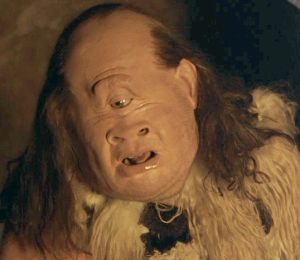 READ: Hacker Usage Glossary (does not demand a linear read, instead go through and check the rules you do or do not know).
Read & annotate "You Can Find Love Now" by Ramona Ausubel. Respond to the short story in writing as Informal Writing #2. In your essay, be sure to discuss rhetorical devices employed by the writer. Focus on one or more of the following questions:
1. If you read The Odyssey in high school, how did this story accentuate or otherwise widen your view of the original piece?
2. Did the format of the piece (the back and forth between the voice of the Cyclops and the voice of the computer program) accentuate how you related to the theme? If so, how specifically?
3. Do you think that the Cyclops will be successful in luring love back to his cave? Why or why not?
4. We will return to a deceptively simple question we explored with the Luke Johnson poem: Was this a hopeful story or a sad story? Discuss why you feel that way.
Be ready to discuss on Monday.
Monday, September 14, 2015
Class #3: ASSIGNMENT: Monday, September 14, 2015

Students should also read this New York Times article as an added resource. As well, as this pull quotation from the author:
Ausubel: Death and what happens to us after we’re gone is the biggest question there is. Biggest by many, many powers. Maybe we simply disappear and maybe we go to a fluffy white cloud place, where all our childhood dogs are waiting along with everyone we’ve ever loved (and they all somehow get along), or maybe we come back as stinkbugs or sparrows. Until each of us gets there, the answer to the questions is None/All of the Above. When I was writing “Safe Passage,” I had the sense that Alice, the main character, found a kind of peace in her strange surroundings, and that she walked out into that peace (or swam, in this case) and there was something there, as opposed to nothing. As long as there is something, as long as there is matter, there is no ending. Birth into what, we don’t know, but, at least in the world of this story, death is a rebirth.
Informal Essay #1: Identify the juxtaposition apparent in Ausbel's story. Use this OneStory interview and the pull quote attached below for help. How does the author use imagery that creates comparison by highlighting very contrasting ideas? How does that effect create a unique and emotional image of death? What is your impression of this image? How does the Times article do the exact same thing? Is this a good thing? A bad thing? Feel free to explore your own take on death and the after life while pursuing answers to these questions.
Narrative revisions due Wednesday.
Class #3: IN-CLASS ACTIVITY: Monday, September 14, 2015
 Monday, February 2, 2015,
 IN-CLASS ACTIVITY: Learning Inventory
Take five minutes to do the following at the beginning of class.
1. Review your completed LIC paperwork.
2. Read the given sheet that outlines the meaning of each category.
3. On the back of your worksheet, write a few sentences explaining if, after reading the handout, you think you belong in a different group. Identify the group and briefly explain why.
4. Then, on another piece of paper write a few sentences in response to the following questions.
Consider your own personal educational experiences when answering:
A. Considering the strengths and weaknesses of your learning style, and considering the way public education is structured, what has been one of the most challenging parts of being a student? In other words, what causes you to struggle? What do you have the hardest time dealing with?
B. Considering the strengths and weaknesses of your learning style, and considering the way public education is structured, what is something you excel at that many of your peers struggle with? In other words, what comes easy to you as a student?
C. Everyone is going to be put into a family. If you had a chance to interview for a spot in your family, how would you sell yourself? In other words, why would I want you (or someone like you) in MY family?
5. Make-sure you hand these papers in before you leave class today.
Sunday, April 26, 2015
Class #24: Monday, April 26th: The Research Proposal & Family Conferences -- THE ROAD TO YOUR FINAL PAPER
Conference Assignment: Please have the following information ready for submission during our conferences. All components must be typed and professionally presented:

1. Working Outline
2. Working Thesis
3. Annotated Bibliography
1. The working outline is a very important first step that serves as a guide for your entire paper. Follow any form you feel most comfortable with (See Hacker for a variety of outlining methods if confused). The outline should give me an idea of how you plan your paper…point by point at least…example by example if you wish. There should be a bullet-ed component for each paragraph. Keep in mind that this is the mode by which you will also present your research. Remember that good development "systematically fulfills the reader's expectation."
2. Student will present a working thesis. The expectation is that this will allow us to work together in making sure the paper is on the right track. Thesis should evince the components of thesis writing discussed in class today.
The thesis for this paper should be both complex and clear.
Make sure to move through a logical progression with your ideas.
SEE CLASS LECTURE NOTES
3. Annotated Bibliography: Should provide insight on the sources you plan to use. Where does information exist? What types of sources have been prevalent? Why would you use (or not use) the sources you've collected. To jog your memory...Here are some examples.
Here is a friendly sample of what organization COULD or MIGHT look like for this paper.
Intro: Include a personal introduction (about a 1/2 page or so...something personal, anecdotal or use one of the introduction types discussed in class or on the blog). It explains your connection to this topic and introduces your essay.

1. Working Outline
2. Working Thesis
3. Annotated Bibliography
1. The working outline is a very important first step that serves as a guide for your entire paper. Follow any form you feel most comfortable with (See Hacker for a variety of outlining methods if confused). The outline should give me an idea of how you plan your paper…point by point at least…example by example if you wish. There should be a bullet-ed component for each paragraph. Keep in mind that this is the mode by which you will also present your research. Remember that good development "systematically fulfills the reader's expectation."
2. Student will present a working thesis. The expectation is that this will allow us to work together in making sure the paper is on the right track. Thesis should evince the components of thesis writing discussed in class today.
The thesis for this paper should be both complex and clear.
Make sure to move through a logical progression with your ideas.
SEE CLASS LECTURE NOTES
3. Annotated Bibliography: Should provide insight on the sources you plan to use. Where does information exist? What types of sources have been prevalent? Why would you use (or not use) the sources you've collected. To jog your memory...Here are some examples.
Here is a friendly sample of what organization COULD or MIGHT look like for this paper.
Intro: Include a personal introduction (about a 1/2 page or so...something personal, anecdotal or use one of the introduction types discussed in class or on the blog). It explains your connection to this topic and introduces your essay.
Saturday, April 18, 2015
NOTICE: ASSIGNMENTS for MONDAY, APRIL 20, 2015
Hey Gang! Don't forget the following assignments for Monday, when we are back in B003.
Final Lit Analysis Papers are due
Annotations from Hunting Ground are due
If you didi not hand in a draft Skube…hand it in Monday (late, but better than never)
Monday, April 13, 2015
Slut Walk Announcement
SLUT WALK: A MARCH TO END RAPE CULTURE
Wednesday, April 15th @ 4:30pm
Starting at Arts and Sciences Building
Wear whatever you like! Bring your friends!
What is a Slut Walk?
A Slut Walk is a protest against explanations or excuses for rape and sexual assault. The goal of the March is to challenge rape myths, including the idea that rape is a response to women’s attire or appearance. It is a call to end the rape culture that permits, excuses, and condones sexual assault.
The protest takes the form of a march where some individuals are dressed in “slutty” or provocative attire. Participants typically hold signs that challenge rape myths (e.g. of a rape myth: "women who wear short skirts are asking for it") and promote ideas of sexual consent (e.g., "no means no” or, even better, “yes means yes”). The goal is to raise awareness and challenge ideologies that permit sexual assault, victim blaming, and slut shaming.
Questions? Want to get involved? Feel free to contact Emily Van Duyne (emily.vanduyne@stockton.edu), Deeanna Button (deeanna.button@stockton.edu),or Erin O’Hanlon (erin.o’hanlon@stokcton.edu).
Subscribe to:
Posts (Atom)